History
The logging era
What looks like old forest is regrowth, about ninety years of it, growing back over a railroad.
The company
About seventy percent of what is now wilderness was logged between 1915 and 1935. The Conasauga River Lumber Company held somewhere between 70,000 and 80,000 acres of virgin timber here, and milled it thirty miles away at the company town of Conasauga, in Polk County, Tennessee. The mill cut 80,000 board feet a day.
The camps and the railroads
Three or four logging camps ran at once, eighty to a hundred men each. Railroads were built by hand up the Jacks and the Conasauga, and floods took out the trestles more than once and the crews rebuilt them. Bunk cars were winched up the hillsides on cable. Logs came out behind horses where the ground allowed it, and by cable where it did not.
The timeline
Logging finished in the Conasauga drainage in 1928 and started on the Jacks River in 1929. The Depression stopped the work for about three years, and during that stretch the loggers went to work for the Civilian Conservation Corps, building facilities that are still in use. That is where Old CCC Camp Road gets its name. The Forest Service bought the land from the lumber company in 1934 and 1935. Franklin Roosevelt established the Chattahoochee National Forest on July 9, 1936. The rails came out in 1937.
What's still on the ground
Crossties. Trestle footings. Drill holes in the rock where dynamite went in. Spikes, cable, steel support rods, horseshoes, the foundations of buildings that are gone. None of it is hard to find if you know to look.
Where to see it
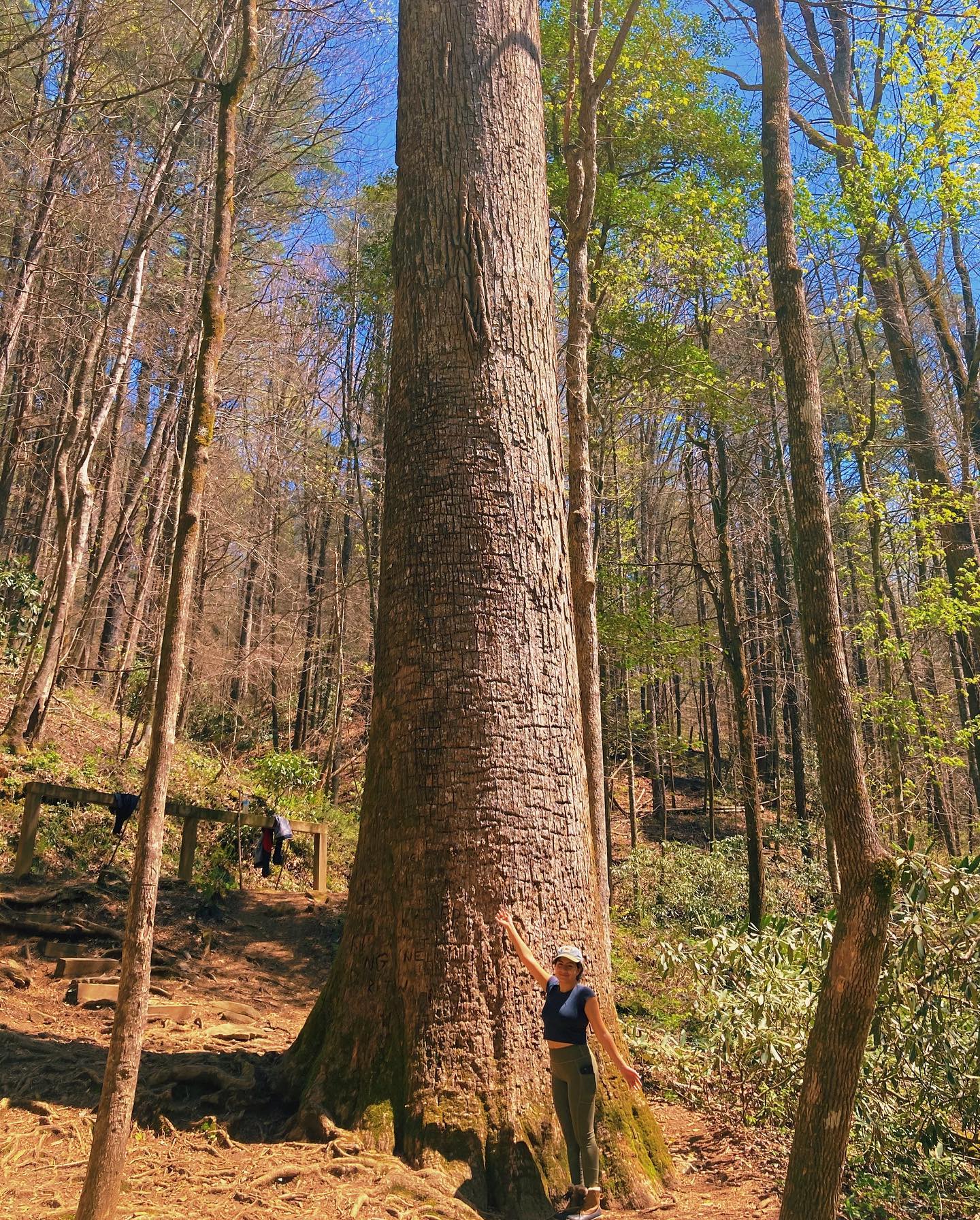
The Jacks River Trail follows the old railbed to what was once a logging camp, at what is now Jacks River Falls and Beech Bottom. Walk it and you are walking the grade the trains ran on. The Gennett Poplar, the big tulip poplar on Bear Creek Trail, is reported to be a tree the company left standing, too large to be worth moving.
What reads as mature forest today is roughly ninety years of regrowth over an industrial landscape. Most of the trails in this guide are that industry's leftover infrastructure: old rail grades, old wagon roads, old fire lines. The Cohuttas were not preserved untouched. They were logged hard, then left alone long enough to grow back.
Read more
The Field Guide to the Cohutta Mountains
This is the short version. The book goes deeper into the logging era, the ghost grades, the CCC roads, and the rest of the human history worked into this land.
Read about the book