Conasauga Watershed

Tearbritches Trail

strenuous

6.5 mi

Distance

+2526 ft

Elevation Gain

out and back

Trail Type

4

Crossings

Overview

A steep 3.5-mile descent from Little Bald Mountain to Bray Field, losing over 2,000 feet into the Conasauga River Valley.

Trail Description

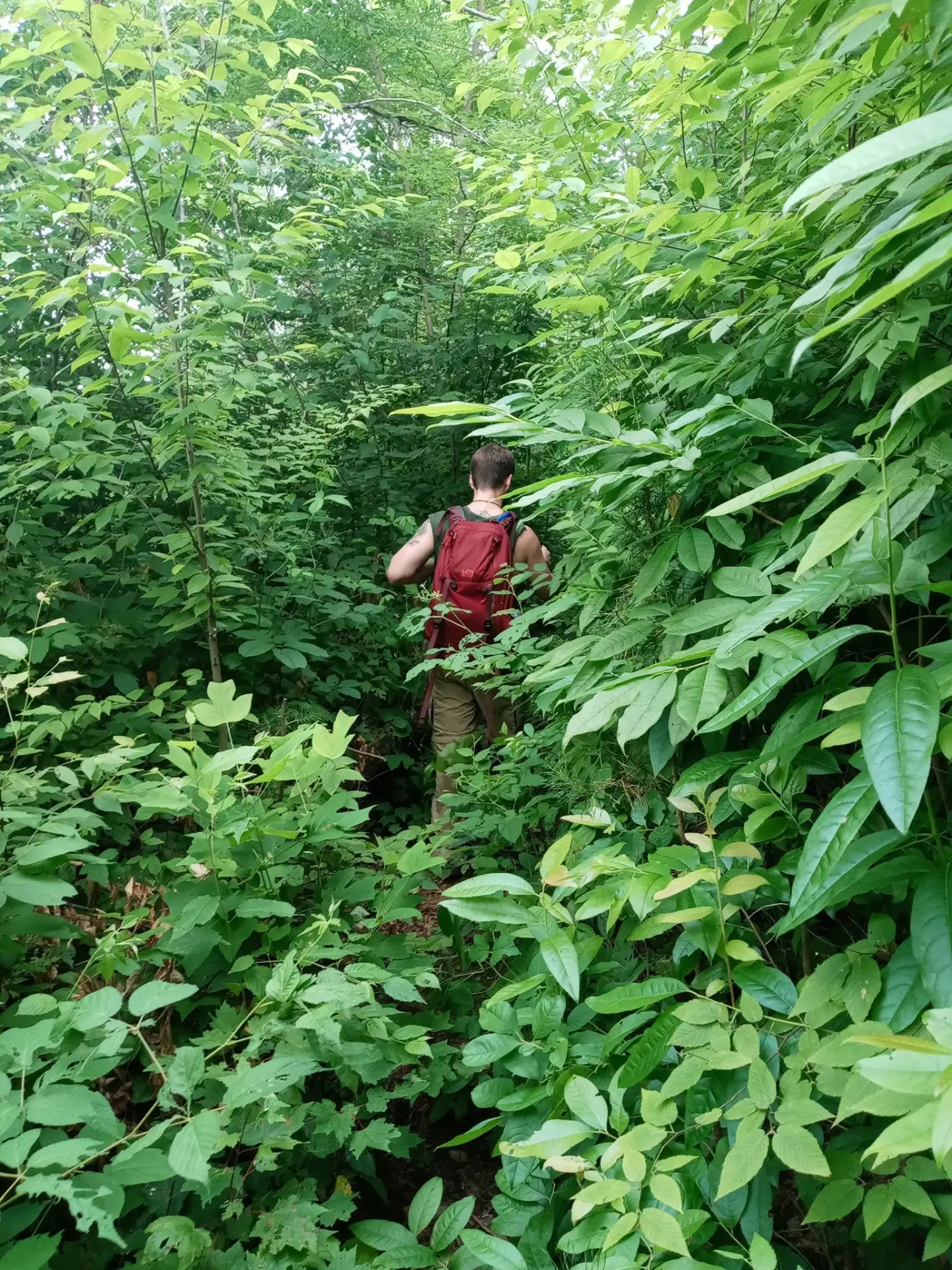
Tearbritches Trail is one of the most dramatic descents in the Cohutta Wilderness — a ridgeline plunge from the windswept crest of Grassy Mountain and Little Bald Mountain down into the deep folds of the Conasauga River Valley. At 3.5 miles, it is short by wilderness standards, but its elevation change tells the true story: from 3,622 feet at the trailhead to roughly 1,890 feet at Bray Field, the path loses more than 2,000 vertical feet in a rhythmic, stair-stepped descent. The trail begins with an ascent of approximately 0.6 miles to the summit of Little Bald Mountain at 4,009 feet — from here, there is no higher point towards the West until you reach the Black Hills of North Dakota. Here, the forest thins into high-elevation oak–pine woodland dominated by chestnut oak (Quercus montana), scarlet oak (Quercus coccinea), and white pine (Pinus). In autumn, these ridges burn in crimson and copper. On clear days, distant Appalachian folds ripple toward Big Frog Mountain and Tennessee. After cresting the summit, the descent begins in earnest.


Tearbritches drops in intervals — short, steep pitches followed by level stretches along narrow ridgelines. The walking alternates between breath-catching declines and almost contemplative ridge travel. This alternating structure gives the trail its distinctive cadence. Around mile 1.5, the trail reaches its only high-elevation creek crossing — typically modest in flow but slick with moss and leaf litter. Beyond this crossing, the forest transitions gradually from dry ridge to richer mid-slope hardwoods. White oak (Quercus alba), tulip poplar (Liriodendron tulipifera), and hickory (Carya spp.) begin to dominate, and in spring the understory erupts with flame azalea (Rhododendron calendulaceum), galax (Galax urceolata), and foamflower (Tiarella cordifolia). At mile 3.0, the trail commits to its final descent — a severe drop into the Conasauga River Valley. The air cools. Moisture rises. The path parallels Tearbritches Creek on its left bank for roughly 0.2 miles before crossing it at mile 3.5. This crossing marks the terminus, just steps from Bray Field — the most significant trail junction in the western Cohuttas. Bray Field, once an Appalachian farmstead, now rests in partial reclamation beneath sycamores (Platanus occidentalis) and open grasses.


It is one of the few sunny river flats in this interior valley, popular for summer camping and swimming in the nearby waterholes of the Conasauga River. From this intersection, hikers may continue: • Upstream or downstream on the Conasauga River Trail • Eastward on Hickory Creek Trail • Northward toward Panther Creek Falls (0.4 miles upstream) Except for Chestnut Lead, this junction connects nearly every trail in the western half of the wilderness. Culturally, this ridge carries older stories. Directly across Forest Service Road 17 from the Tearbritches Trailhead lies the high-elevation terminus of Emery Creek Trail. The adjacent campground is traditionally said to be a historic Cherokee stickball ground — the “Little Brother of War,” where disputes were settled through athletic contest. The game required immense endurance and courage, qualities mirrored in the physical demand of this very mountain. Hiking Tearbritches as an out-and-back requires a strenuous return climb of more than 2,000 feet. Many hikers instead descend to the river and form loops via Conasauga River Trail and Chestnut Lead. This trail is not subtle. It is vertical, decisive, and muscular — a ridge walk that reminds you how quickly the Appalachian landscape can shift from sky to water.

Trailhead

Trailhead

Tearbritches Trailhead

34.91480, -84.60410

Driving Directions

From Eton, GA, turn east from Hwy 411 onto CCC Road. Travel 6.0 miles until pavement transitions to gravel (FS18). Continue toward Potatopatch Mountain. At the three-way intersection with FS68, turn onto FS68 and begin ascending. Continue approximately 6.0 miles to the FS68/FS64 intersection at Potatopatch Mountain and turn left. Drive approximately 3.5 miles to the Tearbritches Trailhead on the right. Alternate approach via Crandall: From Hwy 411 north of Eton, turn onto Grassy Street. Cross railroad tracks, turn right onto Crandall-Ellijay Road, then left onto FS630 (Mill Creek Road). Follow FS630 to FS17. Turn sharply right and ascend to FS68. Turn left and proceed 0.4 miles to Tearbritches Trailhead on the left.

Road Access

Trailhead located on FS68 near Little Bald Mountain. Gravel roads may require caution after rain. High-clearance vehicle recommended.

Safety Notes

Severe elevation change. Descending is straightforward; climbing out is strenuous. Leaf litter and loose gravel can make downhill sections slick. Limited water access until the lower valley. No cell service.

Camping

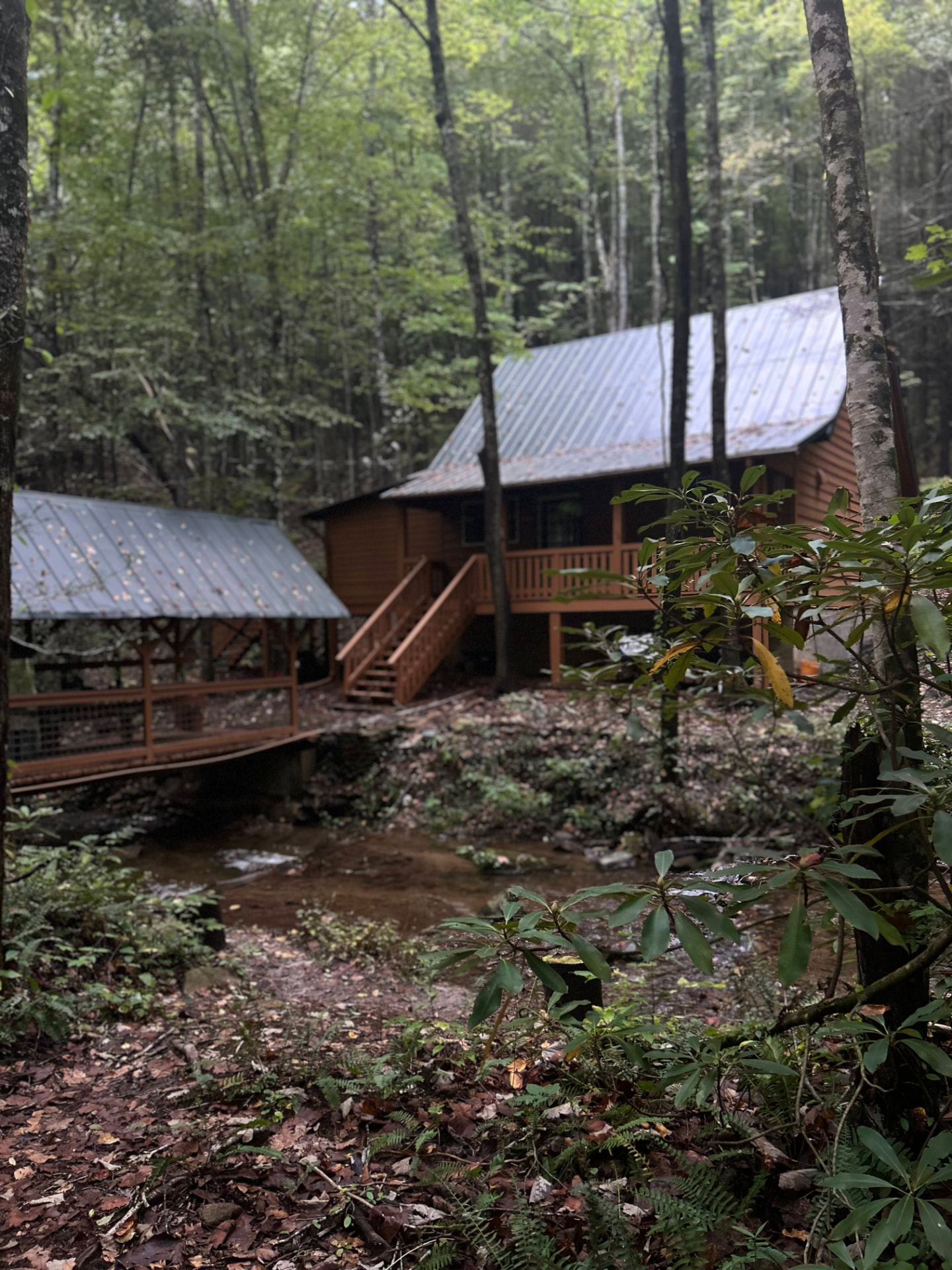
No designated campsites along the ridge. Primary camping occurs at Bray Field near the terminus. Practice Leave No Trace. Avoid camping directly beside Tearbritches Creek.

Permits & Regulations

No permits required. Wilderness regulations apply. Group size limits enforced. Check for seasonal fire restrictions.