Jacks River Watershed
14.4 mi
Distance
+3175 ft
Elevation Gain
out and back
Trail Type
1
Crossings
A 7-mile remote ridge traverse descending from East Cowpen to Jacks River through some of the wildest terrain in the Cohutta Wilderness.
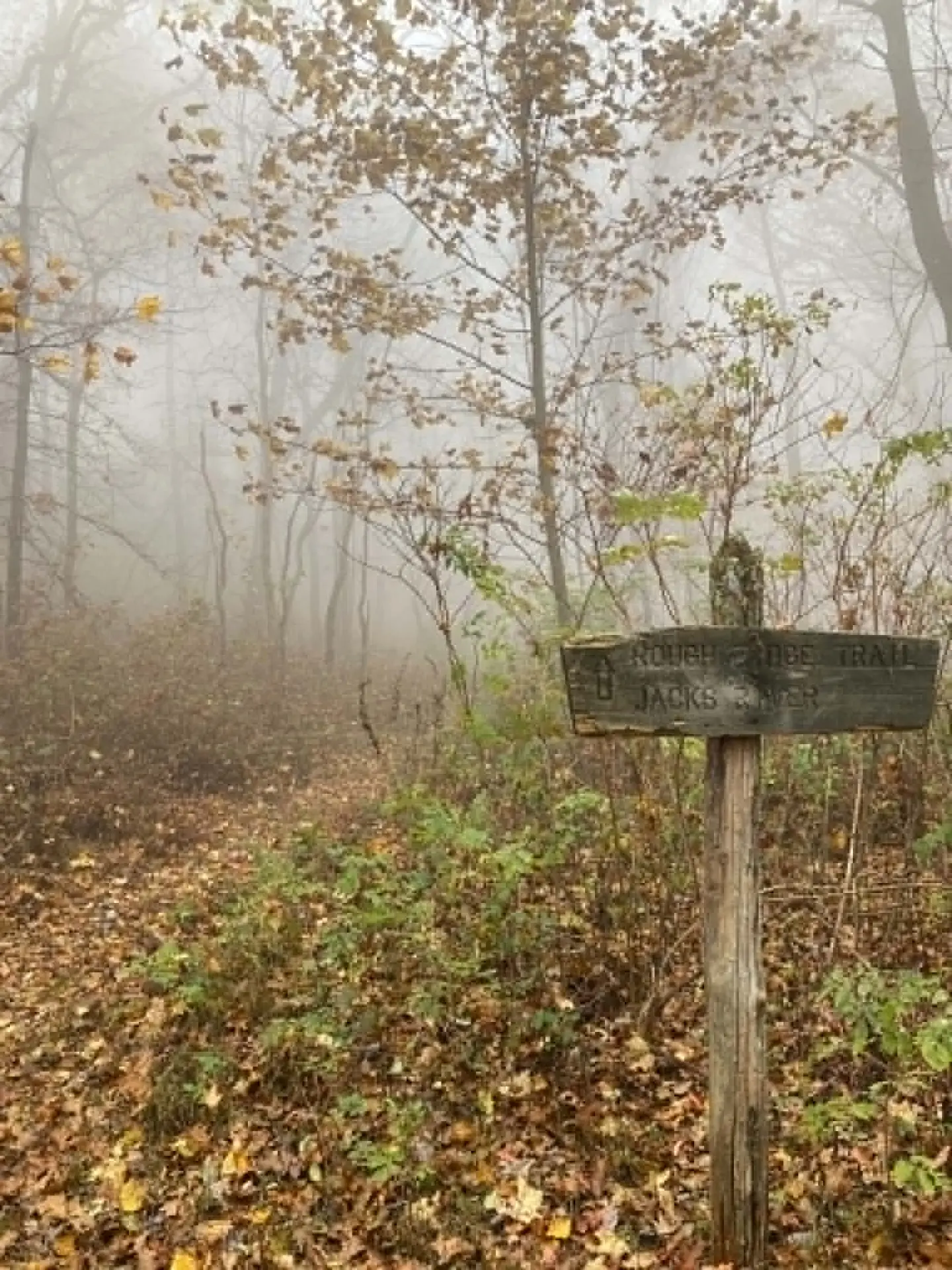
Rough Ridge Trail is one of the longest and least-traveled interior ridgeline routes in the Cohutta Wilderness. Stretching 7 miles between East Cowpen Trail and Jacks River Trail, it traces the high spine of Rough Ridge before descending steeply into the Rough Creek drainage. Most hikers access Rough Ridge from the Three Forks Mountain Trailhead, hiking 0.4 miles along East Cowpen Trail to the signed junction. From this high-elevation start, the trail commits itself to the ridgeline immediately, following the crest with a gradual, undulating rhythm for the next 4.6 miles. The tread here is generally wide and forgiving, occasionally dipping to one side of the ridge before returning to the spine. Winter reveals the architecture of the land: to the west, Cowpen Mountain; to the east, the secluded high elevation valley carved by Rough Creek. That valley — hemmed in by Rough Ridge and Cowpen— is among the most isolated pockets in North Georgia. There are no direct trails into it. In its folds, black bear (Ursus americanus) and white-tailed deer (Odocoileus virginianus) move through mixed hardwood forest with little to no human disturbance. It is one of the quiet interiors of the Cohuttas. The forest along the ridge consists primarily of chestnut oak (Quercus montana), scarlet oak (Quercus coccinea), mockernut hickory (Carya tomentosa), and mountain laurel (Kalmia latifolia) crowding the understory. In fall, the ridgeline burns bronze and red. In winter, long views stretch toward Big Frog Mountain (4,219 feet), the highest summit in the combined Big Frog–Cohutta Wilderness. At mile 4.6, the trail descends to a small spring on the right — often the only reliable water source along the ridge. A sign marks the boundary where horses are no longer permitted. From this point, the character shifts. The next 1.7 miles form a stair-step descent losing over 1,000 feet toward Jacks River.
The ridge narrows. The trail twists tightly along the crest, often limiting visibility ahead. Deadfall is common. Summer brings briars and dense green tunnel sections. The hiking becomes more technical — footing careful, progress deliberate. As elevation drops below approximately 2,000 feet, the forest transitions. Eastern hemlock (Tsuga canadensis) begins appearing in larger numbers, especially along shaded draws. Rhododendron thickets (Rhododendron maximum) thicken as the trail approaches water. In these cooler ravines, the northern slimy salamander (Plethodon glutinosus) and spring salamander (Gyrinophilus porphyriticus) inhabit seepages and rocky crevices. Near mile 6.3, the trail enters the full rhododendron belt characteristic of Southern Appalachian drainages. Massive hemlocks tower above the understory — some remnants of older forest pockets that alter the entire light quality of the woods. The air cools perceptibly. The final descent is steep and sinuous. The trail runs briefly parallel to a tributary flowing west into Rough Creek, then crosses Rough Creek slightly upstream of its confluence. This crossing can be slick but is typically manageable except after heavy rainfall.
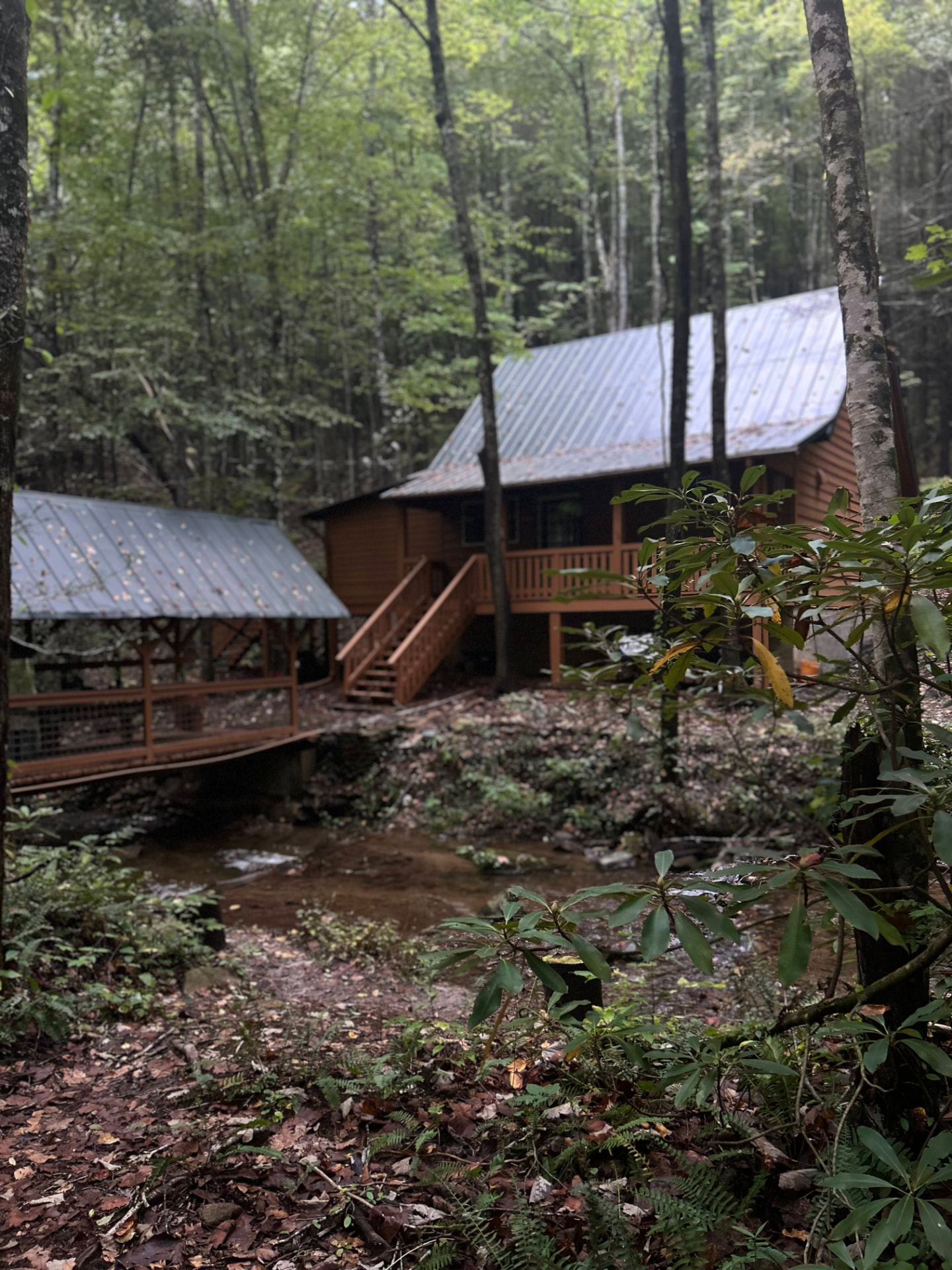
From there, Rough Ridge follows Rough Creek downstream on its left bank for approximately 0.3 miles before reaching its junction with Jacks River Trail. Notably, this junction differs from most other feeders into Jacks River Trail: here, the Jacks River Trail temporarily leaves its namesake river to cross Rough Creek at the junction before returning to the main river corridor. A quiet campsite rests near the junction along Rough Creek. Rough Ridge is often incorporated into a 15.9-mile loop beginning at Three Forks Mountain, descending via Hickory Ridge to Jacks River, then returning via Rough Ridge and East Cowpen — or in reverse. Many hikers find finishing on East Cowpen after fatigue has set in to be demanding due to its sustained climb. This is predominantly a ridgeline experience — expansive, interior, and removed. Water access comes only at the descent. For much of its length, Rough Ridge feels suspended between drainages, high above the whitewater energy of Jacks River.
From Eton, GA, take Hwy 411 north and turn right onto CCC Road. Continue 6 miles until pavement ends at FS18. Follow FS18 approximately 10 miles toward Potatopatch Mountain. At the FS68 intersection, turn uphill and continue 6 miles to the FS68/FS64 intersection. Turn right onto FS64 and drive 4.3 miles to Three Forks Mountain Trailhead. Alternative access from Ellijay via Hwy 52 west to Conasauga Road (FS18), then FS68 to FS64. Total distance from Hwy 411: approximately 20.3 miles.
Road Access
Primary access via Three Forks Mountain Trailhead (FS64). Gravel forest roads; winter seasonal closures possible.
Safety Notes
Limited water sources until mile 4.6 spring. Steep descent in final 1.7 miles. Rough Creek crossing can be slick. Deadfall and summer overgrowth common. No reliable cell service.
Ridgetop camping possible in dispersed sites. Reliable water near spring at mile 4.6 and at Rough Creek near trail terminus.
No permits required. Wilderness regulations apply. Horses prohibited beyond designated point near mile 4.6.