Conasauga River Trail (Betty Gap)
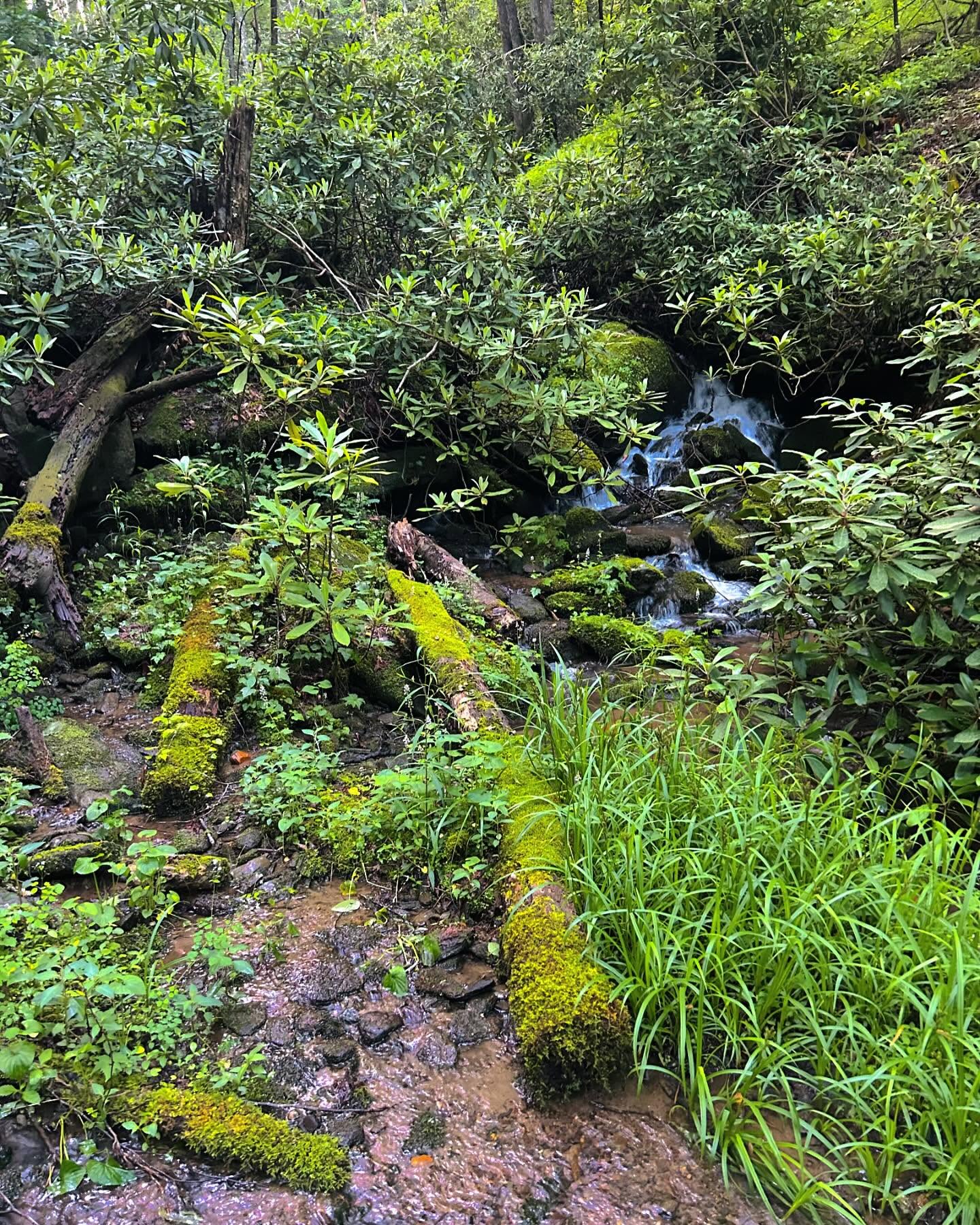
Thirty eight crossings of the Conasauga, the wettest walk in north Georgia.
- Distance
- 13.1 mi one way
- Elevation gain
- 1,640 ft
- Trail type
- Out & Back
- Difficulty
- Strenuous
- Crossings
- 38 crossings
- Best season
- Summer and early fall only, when the river runs low. The trailhead road closes in winter, about January 1 to early March.
Wilderness status
Inside Cohutta Wilderness
Bicycles
Bicycles are prohibited on this trail. Mechanized transport, including mountain bikes, is banned in designated wilderness under federal law by the Wilderness Act of 1964. This is enforced by the Forest Service. Do not ride here.
The trail
Thirty eight crossings in thirteen miles is not a hike with some water in it. It is a walk up a river with intervals of dry ground. The Conasauga runs clearer than anything else in this part of the state and the crossings are the point rather than the obstacle, which is why people come back to this one. The exact count moves with the river. High water after rain can push it into the upper thirties; call it somewhere in the mid to high thirties rather than a fixed number.
Betty Gap itself sits in a north-facing rich cove forest, the kind of ground that stays cool and wet enough to feel like a temperate rain forest. That's not just a figure of speech: the eastern Cohuttas get more than 80 inches of rain a year, among the wettest spots in Georgia, and this cove is where it shows most.
The whole trail sits inside the Cohutta Wilderness, and the first stretch out of Betty Gap still shows scars from the 2016 Rough Ridge Fire: charred stumps and thin undergrowth along upper Birch Creek, the trail's headwater tributary. Past Ford 37, an old stacked-rock wall from the logging-era railroad bed is still standing beside the trail. The Conasauga carries more cliff line than any other river of its size in Georgia, and Bray Field, a large flat about halfway along, is the trail's most popular camping spot.
Wear shoes you can drain, start when the water is low, and give up early on the idea of a fast pace. In high water this becomes a different and much more serious proposition.
The clarity here is not just scenery. The Conasauga is one of the most biologically diverse rivers of its size in North America, and this stretch is part of that system. The basin holds roughly ninety native fish species, including the amber darter and the Conasauga logperch, both federally endangered, along with a mussel fauna that has dropped from more than forty species historically to about twenty today. Watch where you step.
Marquee feature
Thirty eight crossings and the clearest water in the range
Getting there
Forest Service roads to the Cohutta trailheads are gravel, seasonally gated, and often without cell service. Download directions before you leave pavement.
Access roads and winter closures
Open trailhead in Google MapsLoops that use this trail
- Tearbritches, Conasauga River, and Chestnut Lead
10.5 mile loop
Stay near the trailheads
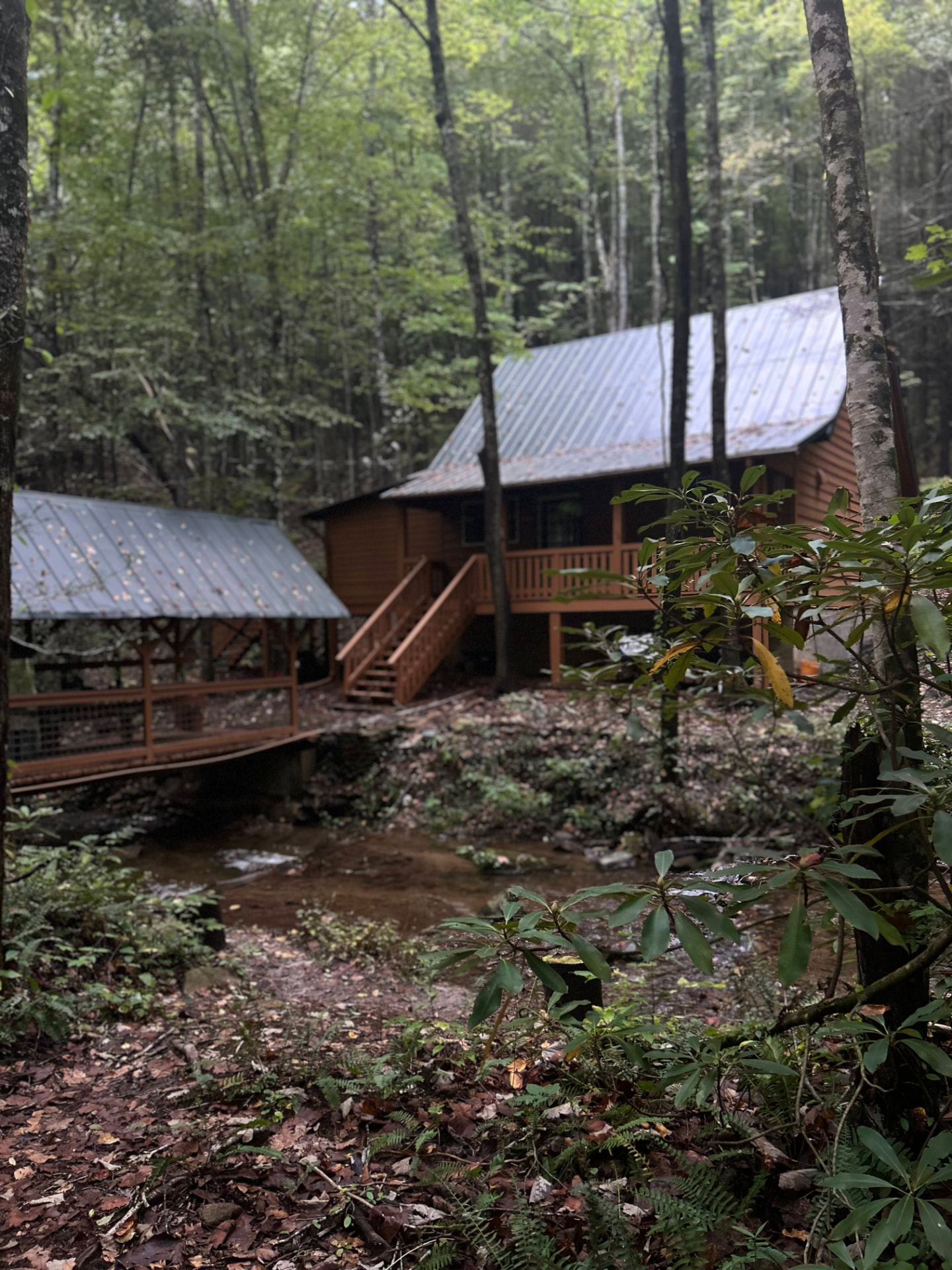
Sherpa Camp — a cabin at the edge of the wilderness.
The drive in from Atlanta or Chattanooga is long enough that most people are better off sleeping near the gate than starting at 4 a.m. Sherpa Camp is a small cabin on Holly Creek, on the western edge of the Cohutta Wilderness, about 25 minutes from Ellijay. It sleeps five, with a covered porch, a firepit, and a creek. Cell service ends before you get there.
See Sherpa Camp