Conasauga Watershed
3.3 mi
Distance
+974 ft
Elevation Gain
out and back
Trail Type
2
Crossings
A quiet 2-mile descent through old-growth cove forest and chestnut remnants to a boulder-strewn stretch of the Conasauga River.
Chestnut Lead Trail is a short but deeply atmospheric descent from the upper slopes of Cohutta Mountain into one of the richest hardwood coves in the Conasauga watershed. At just 2.0 miles, it is often overlooked — and that is precisely its gift. The path falls steadily from 3,274 feet to the Conasauga River at 2,283 feet, losing nearly 1,000 feet in elevation while passing through forest that still remembers another age. The trail begins immediately by heading east and gently surrendering elevation beneath towering tulip poplars (Liriodendron tulipifera), white oak (Quercus alba), and sweet birch (Betula lenta). In spring, the understory awakens with trillium (Trillium grandiflorum), bloodroot (Sanguinaria canadensis), and the delicate white blooms of mountain silverbell (Halesia tetraptera), whose pendulous flowers glow in filtered light. This is a prime birding corridor in April and May — scarlet tanagers (Piranga olivacea), wood thrush (Hylocichla mustelina), and black-throated blue warblers (Setophaga caerulescens) move through the canopy in migratory chorus. Around mile 0.7, the trail bends north and levels briefly, entering a cool hardwood hollow.
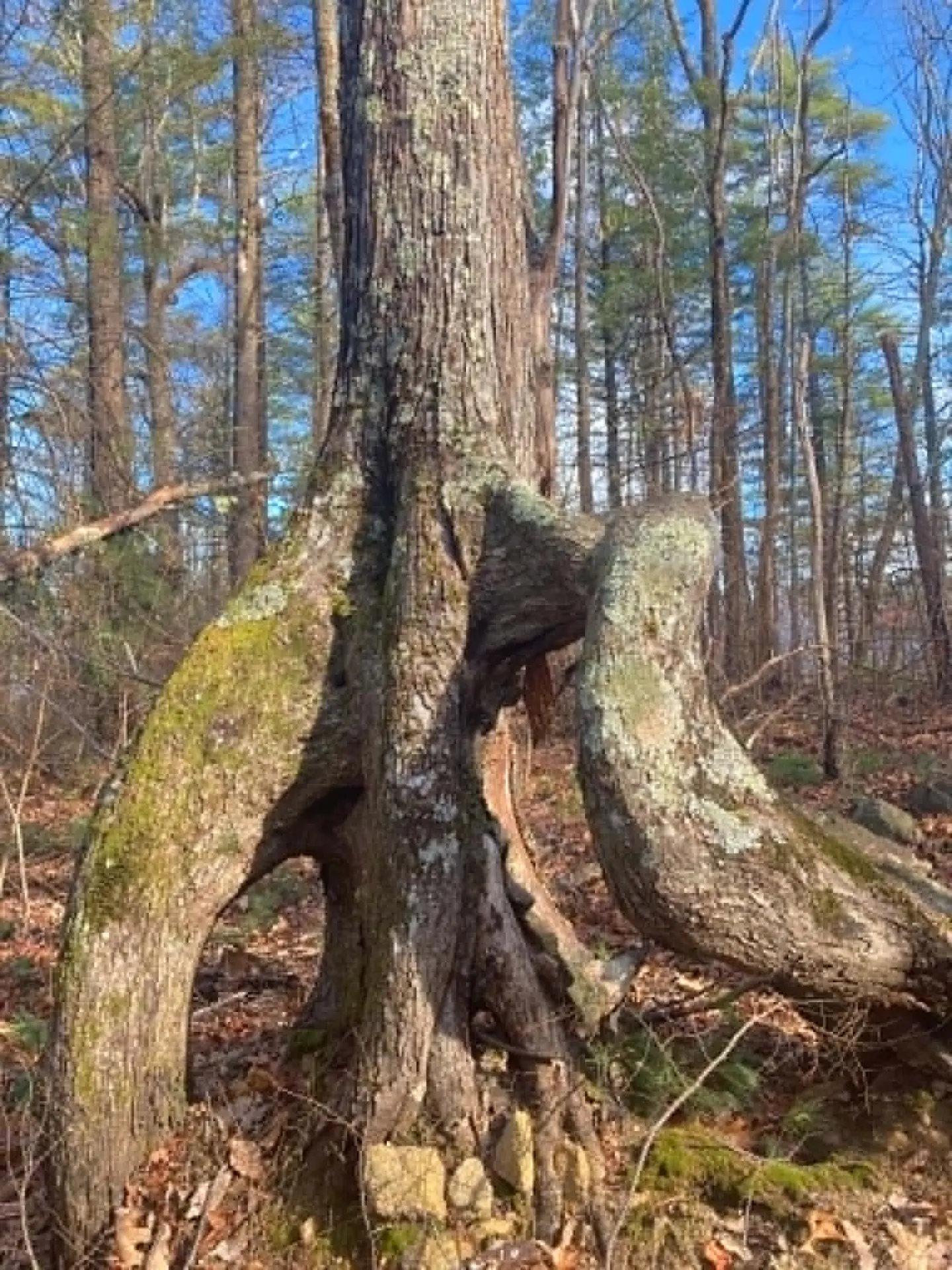
Here the memory of the American chestnut (Castanea dentata) lingers. Though the species was devastated by blight in the early 20th century, hikers still notice weathered, fallen trunks and resprouting saplings — quiet witnesses to a forest once dominated by chestnut mast and towering straight trunks. Near mile 1.0, the trail begins paralleling Chestnut Creek from above. The sound of water strengthens as the path descends closer, eventually crossing the creek for the first time at mile 1.2. Large, moss-softened boulders create a picturesque ford. The crossing is typically manageable, but as with all Cohutta waters, rainfall can transform it quickly. From here the trail follows the creek on its left bank before rising slightly above it, offering intermittent glimpses of riffles and plunge pools below. Two more crossings follow in quick succession around miles 1.6 and 1.75, each marked by stone and the cool clarity typical of high-gradient mountain streams. Chestnut Creek supports aquatic life such as mottled sculpin (Cottus bairdii) and the larval forms of salamanders, including the northern dusky salamander (Desmognathus fuscus), emblematic of these unpolluted waters. The final crossing — a gentle ford of the Conasauga River itself at mile 2.0 — marks arrival at the junction with the Conasauga River Trail.
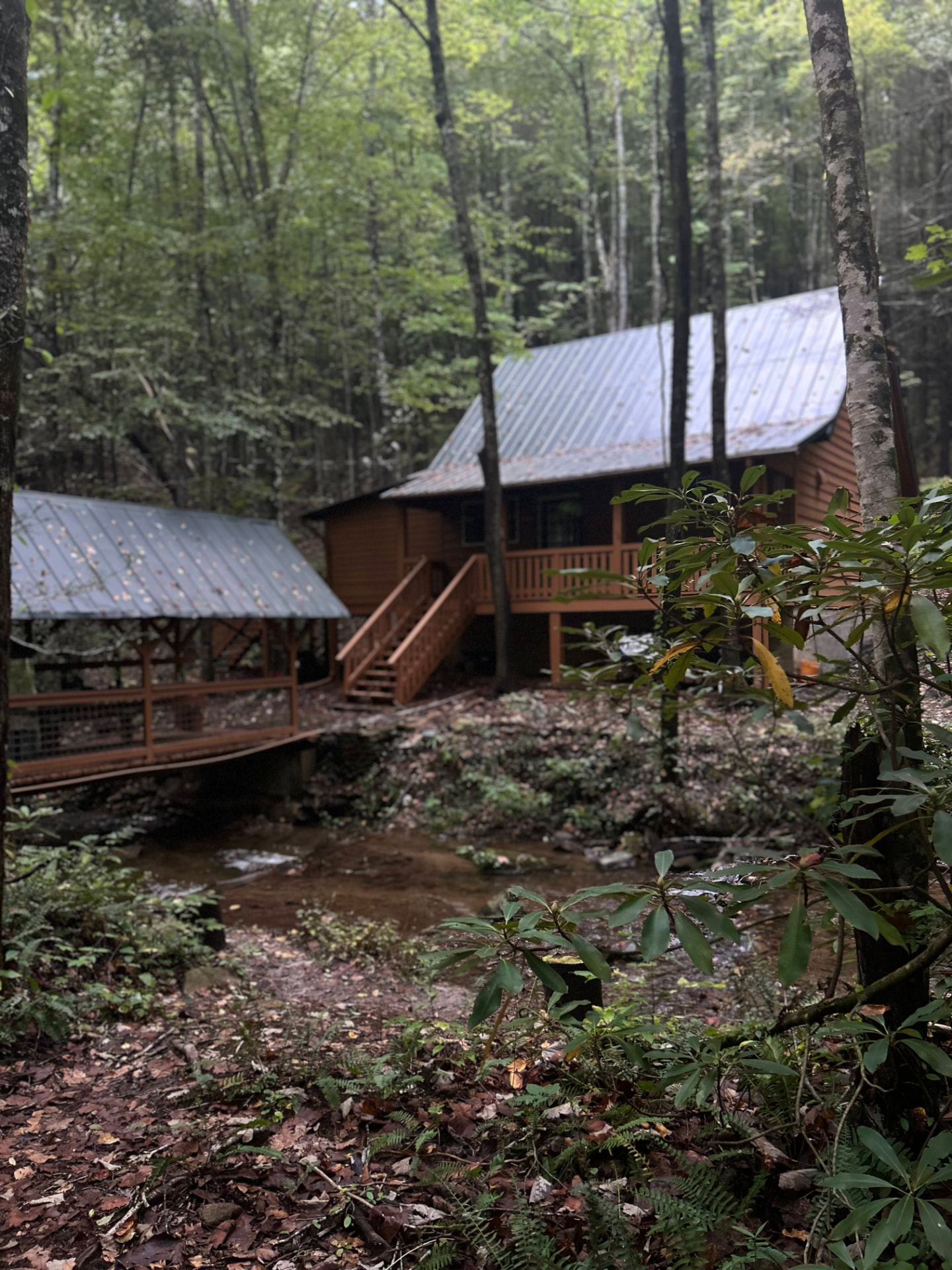
Here, the river is narrower and less turbulent than downstream stretches. Massive quartzite boulders interrupt the current, forming small cascades and quiet pools. A well-used campsite rests to the left, positioned beside the river in a natural amphitheater of stone and water. Chestnut Lead joins the Conasauga River Trail approximately 3.5 miles upstream from Bray Field and seventeen river crossings above it. Because it connects at this higher, less frequented stretch, hikers who descend Chestnut Lead often find greater solitude than those approaching via Hickory Creek or Tearbritches. The forest here feels older, slower. It carries the layered memory of chestnut groves, Appalachian agriculture, and the eventual return of wilderness. Walking down this path, you feel the mountain yielding you to water.
From Eton, GA, take CCC Road east for approximately 6 miles until pavement transitions to gravel (FS18). Continue toward Potatopatch Mountain. At the three-way intersection with FS68, turn onto FS68 and proceed uphill. At the FS68/FS64 intersection, turn left onto FS68 and drive approximately 2.0 miles to the Chestnut Lead Trailhead on the right. Alternate approach via Crandall: From Hwy 411 north of Eton, turn onto Grassy Street before Dollar General. Cross railroad tracks, turn right onto Crandall-Ellijay Road, then left onto FS630 (Mill Creek Road). Follow FS630 to FS17, ascend to FS68, turn left, and continue 1.5 miles past Tearbritches Trailhead to Chestnut Lead Trailhead on the left.
Road Access
Chestnut Lead Trailhead is accessed via Forest Service Road 68 near Potatopatch Mountain. Roads are primarily gravel beyond CCC Road and may require high-clearance after heavy rain.
Safety Notes
Four creek crossings are required, including a final ford of the Conasauga River. Crossings may be hazardous after rainfall. The descent is steady; hiking out requires sustained climbing of nearly 1,000 feet.
A well-established campsite exists at the junction with the Conasauga River Trail beside the river. Camp at least 200 feet from water where feasible and practice Leave No Trace principles.
No permits required. Wilderness regulations apply. Group size limits enforced. Check seasonal fire restrictions.